The roofline is a portrait of a home, the place where feature fulfills shape. When a task requires credibility, the details at the ridge and eaves matter as much as the brick bond or home window muntins. Smokeshafts, and the shadows that crown them, are amongst one of the most aesthetically consequential components. They stress the horizon, framework long views, and telegraph the age a home belongs to. If the profile is wrong by an inch, the eye knows. If it is right, everything else appears to click into place.
Crafting custom-made chimney shrouds that harmonize with period style is not a paint-by-numbers exercise. It takes fluency in historical forms, an understanding of local environment and codes, and respect for the facts of modern burning systems. The best outcomes likewise come from an integrated strategy, where the shroud's language brings across to custom cupolas, Custom-made Dormers, Customized Finials, Customized Leader Boxes, Custom-made Roofing Vents, and also Personalized Snow Guards. Residences feel systematic when metalwork talks in one dialect.
Below are area notes from twenty years of defining and building bespoke roof steels for estates, city condominiums, and careful reconstructions. I have made every blunder proprietors pay a lot to stay clear of, and I have found out where to hold a line and where to bend. The names of periods work, but the reasoning beneath them matters more. When you understand the reasoning, you can design with confidence.
Why period fidelity is greater than cosmetics
Historic designs advanced as options to environment, products, and craft. Georgian symmetry was not only about etiquette, it organized water and tons paths. Shingle Style spirit, with its sweeping hips and nests of dormers, took care of seaside winds and celebrated timber's plasticity. A smokeshaft shroud that appreciates these pressures will certainly not just look right, it will work.
I have seen late Victorian houses with snub-nosed modern-day caps that backdraft in a nor'easter, and Federal condominiums with stainless mushroom vents that review like the incorrect cufflinks on a coat. The objective is not pastiche. It is to shield the flues, handle rainfall and snow, avoid triggers, and add the ideal spelling to the roofline, without shouting.
Codes and appliances have actually changed. Many period chimneys currently serve gas inserts or sealed combustion boilers that enforce clearance and draft demands. Excellent fabricators, the ones you want on your group, recognize just how to nest contemporary internals within a traditionally readable shell. Salvo Metal Works is a strong partner here, due to the fact that they can craft to NFPA and local mechanical codes, then dressed the service in copper, zinc, or repainted steel that matches your house's story.
Reading a chimney's genotype
Before mapping out a shadow, walk the property. Bring a tape, a degree, and binoculars. Research exactly how the chimney leaves the roof covering, whether it is corbeled, whether courses action or project, whether there are flues grouped under a solitary stack, and exactly how the crown loses water. Count blocks and step discloses. Keep in mind mortar color and accumulation. The shadow's structure must align with something on that particular pile, preferably a training course or corbel that makes architectural and visual sense.
I also note the roofing pitch and ridge elevation. A hipped roofing at 7:12 makes a shadow really feel closer and more frontal than a steep 14:12 gable. On reduced pitches, horizontals widen elegantly. On high inclines, verticals compress and tops really feel thin. This will certainly influence lid overhangs and percentage. When unsure, mock up a shape in cardboard and see it from the road. 10 minutes on a ladder can conserve a five-figure error in metal.
Materials that patinate with credibility
For duration job, copper is the default for a reason. It takes a living coating, it softens along sides, and it endures generations. Utilized sensibly, liberty grey and pre-patina alternatives avoid the unpleasant teenage years of fresh cent copper. Lead-coated copper, when commonly used in the Northeast, still checks out as crisp and peaceful, especially on Georgian or Government homes where restraint belongs to the grammar. Recycled zinc has a silky gravitas that fits Arts and Crafts or Continental Rebirth houses.
Painted steel can be persuading if you devote to a color with historical precedent. I have a tendency to stay clear of powder blacks that picture flat. Bone black with a touch of umber, or deep iron gray, reads like aged iron. Stainless is optimal for internals, linings, and screens, but uncoated stainless on the exterior hardly ever belongs on a prewar house. If a project absolutely requires stainless outside for coastal exposure, I break lines with hems and grains to maintain the sheet metal from looking medical. Salvo Metal Works does this well: softening commercial excellence with hand-finished edges, kinky edges, and secured bands that resemble craft.
Georgian and Federal, 1720 to 1830: proportion as discipline
These styles like order. Chimneys usually increase in sets on the gable ends, rectangular with tidy shoulders and a simple crown. For a Georgian or Federal home, a custom-made chimney shadow ought to be disciplined, low-profile, and geometrically calm.
The lid intends to be thin with a crisp drip side. I prefer a two-step lid, the lower tray with a 1 to 1.5 inch hemmed return, the upper plane pitched carefully at 3 to 6 degrees. Overhangs can be modest, three quarters to one and a quarter inches past the cap framework. Higher is hardly ever much better right here. Keep displays hidden behind upright departments that align with the block bond, not floating ovals.
Detailing that belongs:
- Slim border cornice with one trait grain, not a Victorian roll. Strapped edges with little rivets, positioned like switches rather than a zipper. Copper or lead-coated copper with very little accessory, oxidized to a soft brown or gray.
If the house consists of a central cupola or light, think about resembling the shroud's bead size on the custom cupolas. A shared bead profile, subtly duplicated on Custom Leader Boxes and Customized Roofing system Vents, connects the roofing steels right into a peaceful suite. I have had good luck with a 3/8 inch bead on Georgetown rowhouses, scaled to match the brick's mortar joint.
Greek Resurgence and early Italianate, 1830 to 1870: weight and entablature
By mid-century, chimneys grew heavier and sometimes handled the visibility of an entablature. Where Greek Resurgence utilizes strong horizontals, the shroud can recognize that heft. A flat lid with a somewhat deeper cornice, stepped with a fillet and a cyma, can feel ideal if scaled carefully. Italianate houses tolerate taller stacks and richer accounts, though still even more building than picturesque.
I as soon as brought back an 1850s farmhouse in the Hudson Valley where the existing shadows looked apologetic, also thin. We increased the fascia of the cap by three quarters of an inch and added a superficial cymatium with a 1 inch projection. The effect was to seat the stack visually without turning to fuss. For these homes, copper in a mid-brown works, or, if your home carries a strong coloured cornice, a deep iron gray paint on steel can make the metal lean back and let the mass of the chimney speak.
Victorian and Queen Anne, 1870 to 1900: upright play, filigree with restraint
Queen Anne skylines dancing. Turrets, brows, and dynamic ridges invite more vertical punctuation on smokeshafts. Here, smokeshaft pots often return. If the flues and code allow, I like to build the shadow as a base and collar that obtains private pots. Where pots are not practical, a taller shroud with undermined corner blog posts and crested cover feels right.
Avoid delicate decoration that will certainly capture residue and deteriorate. Perforated crests, if made use of, should be removable for cleansing and durable against snow load. I find that a 2 to 3 inch high simple crest with an easy peak or grain reads far better at street distance than elegant laser-cut patterns. If you pick copper, expect more tonal dramatization as the shimmer fades. On painted Victorians with polychrome plans, repainted steel may really be much more authentic to your home's voice.
When a residential or commercial property consists of Custom-made Dormers introduced throughout restoration, echo a motif between dormer cheeks and the shadow lid, probably a small standing joint rhythm at 7 to 9 inch facilities. On one San Francisco task, we matched the dormer joint tempo to the shadow's cover folds. It looked inescapable, like your house had constantly planned it.
Shingle Style and Arts and Crafts, 1880 to 1920: mass, darkness, and honest joints
These residences worship shadow lines and sincere framework. Chimneys are muscle, usually battered or faceted, with deep caps. A thin, fancy lid opposes that spirit. I favor substantial, nearly timber-like caps, even in metal. Construct a thicker fascia with a layered hem and a gentle undercut, and stout corner bands that review like joinery. Leave out glossy grains. Let the aging and the geometry supply the interest.
Zinc and lead-coated copper can be enchanting here, catching seaside light without figurative design. In Maine, we produced a pair of shrouds with 2 inch fascia and a dual hem that shaded the brick below. The covers had a hardly perceptible pitch. From 100 feet, they check out like sculpted stone. The owner might not quit directing them bent on guests, not since they shouted, but due to the fact that they completed the house's vocabulary.
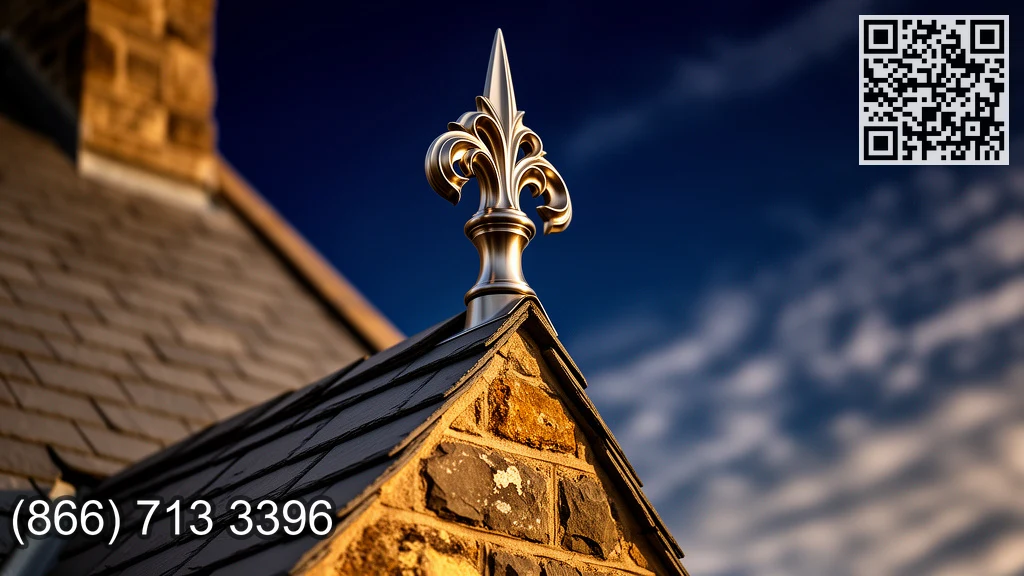
Custom Finials on ridge peaks, when conserved, can stabilize the smokeshaft's mass. Choose types that are simple solids, not spiky trifles. A drop or a squat spear, hand-turned in copper and entrusted to darken, helps distribute upright accents without drifting into gingerbread.
Tudor, 1890 to 1940: love with discipline
Tudor chimneys might turn, corbel, or collect several flues under a shared crown. Numerous had clay pots by default. When home appliances compel you to remove or combine pots, develop a shroud that maintains the feeling of clustered terminations. Separate the cover into bays with little ridges or ribs that resemble specific flues. Differ the height of these ridges subtly, a quarter inch up or down, to maintain the handmade feel.
Color issues. Cozy brownish copper or patinated zinc collaborates with half-timber and block. Very reflective coatings deal with the appearance of wattle and block tapestry. If your house is a lot more Cotswold than fairytale, lean extra stolid, with sober profiles. If it is a playful Los Angeles Tudor Revival, your shroud can be a hair a lot more theatrical, a touch of crest at the cover side, a scalloped return mirrored on Custom-made Leader Boxes at the front entry.
I have also utilized weather-beaten steel on a Tudor, sealed after it got to a steady oxide. It can be credible, but you require to confine runoff discoloration with drip sides and sacrificial flashing, and you have to be truthful with the customer that the initial season will certainly be a research study in patience.
Colonial Revival and American Foursquare, 1900 to 1940: quiet confidence
These houses educate restriction. Smokeshafts are rectilinear, often focused or paired, and ask not to be surpassed. The shroud's work is to prolong the discipline to the practical top. A level cover with right overhang, a moderate fascia, and flush screens are enough. If the house is a brick Colonial Resurgence with sedimentary rock trim, a lead-coated copper shadow that looks practically like rock from the curb will certainly blend without difficulty. On Foursquares with stucco, I have actually made use of painted steel shadows in a rock gray that tones closer to the stucco darkness than the field, aiding the smokeshaft liquify upward.
When these homes acquire brand-new rests, coordinate Customized Roof Vents to disappear. Make reduced, wide vents with the very same hem profile and surface as the shroud fascia. Align their sightlines to window heads or cornice lines. Quiet sychronisation is where luxury hides.
Spanish Colonial and Mediterranean Resurgence, 1915 to 1940: plaster, tile, and soft edges
Here, smokeshafts are typically smudged with rounded shoulders and ceramic tile caps. A regular stainless chase cover is an eye sore. Build a shadow with rolled edges and soft spans that nest into the plaster account. Keep planes loosened and avoid crisp building moldings. Terra-cotta clay pots still look excellent if the flue allows, but I have actually likewise constructed copper collars rolled like pot rims. Repainted steel in a cozy, earthy tone, carefully messed up before finish, can rest amongst Goal tiles without apparent contrast.
Custom cupolas on these homes favor open lanterns with arches. When I define both cupola and shroud, I repeat the rolled side measurement, typically three quarters of an inch, so the language holds. Salvo Metal Works can surface-treat copper to silence the raw orange swiftly, using light chemical patination that stays clear of the sickly eco-friendlies of traveler trinkets. The outcome comes from the environment and the craft.
Midcentury and Modern, 1940 forward: marginal, precise, technical
A flat-roofed modernist box expects minimal expression. The shroud needs to virtually disappear, or existing as a pure datum. That usually implies stainless steel or prefinished light weight aluminum, very tight joints, and made even edges. Yet even modern tasks can take advantage of a millimeter of soft qualities. We hemmed a 1.2 millimeter return on a steel lid last year, simply sufficient to capture light without analysis as accessory. The owner, a designer, observed immediately.
Midcentury ranch chimneys, frequently broad and low, look comfortable with repainted steel in charcoal. Grid screens can be precise squares, not diamonds, and the overhang can be bolder, approximately 1.5 inches, to cast welcome darkness across vast, light block. Integrate the shadow with Custom Snow Guards on low-slope metal roofings by matching finish and rivet rhythm. The overall structure ought to be a system, not a set of parts.
Performance initially, always
Beauty passes away when smoke backs up, creosote accumulates, or triggers getaway during a dry spell. Draft relies on flue geometry, home appliance kind, and local wind patterns. I found out to bring a basic wind increased representation to website sees in seaside markets. Prevailing winds can produce adverse pressure copper finial at the lee of a ridge or parapet. A shadow that works completely in one residence may burp smoke next door.
Clearances to combustibles, screen mesh dimension, and access for sweeping has to satisfy code. For wood-burning fire places, 3/4 inch spark arrestor mesh is common, though regional policies differ. Gas home appliances often restrict spark mesh that small. Salvo Metal Works has assisted designer dual-layer lids, with an aesthetic external skin and a removable internal cage sized to the home appliance. It keeps the sky line pure while satisfying assessors and solution techs.
Water is also a fierce doubter. A correct shroud consists of an upstand that sleeves around the flue tile or stainless lining, with counterflashing that nests below the lid. Hem every edge. Add a return at the underside of the cover to damage drips. Pitch is your pal. I rarely go dead level unless the layout pleads for minimalism and the environment will comply. Even after that, I introduce undetectable swales to steer water far from prone joints.
Getting the scale perfect
A typical mistake is oversizing the cover relative to the stack, attempting to impose dramatization where there ought to be none. Use the brick component as your ruler. A lid that predicts by the width of a header block reads deliberate. An estimate that lands in between modules will look careless permanently. Elevation ought to additionally value the flue discontinuations and the viewer's vantage. On a three-story residence, you can afford a taller fascia since the eye foreshortens it. On a home, high fascias loom.
Mockups are important:
- Make a cardboard or thin plywood cap, full dimension, and examination 2 or three fascia heights. Spray it a neutral gray or brownish to review mass, after that change on the roofing system with clamps for half an hour.
That half-hour will save you from a years of staring at a mistake every time you draw in the driveway.
Integrating the language throughout the roof
Luxury is not rate, it is coherence. When you create a shroud, take the extra action to resemble a distance, bead, or seam in other places. Custom Leader Boxes can borrow the shroud's edge band concept, scaled down and placed where downspouts fulfill stone plinths. Custom Dormers can carry the same hem dimension on their cheeks. Custom Roof Vents, commonly scattered like afterthoughts, can line up and embrace the very same finish. Customized Finials can punctuate ridge junctures with the same patina. Custom Snow Guards, if required, need to match metal and bolt head color, and their brace profile need to rhyme with the shroud's supports.
On a Greenwich estate, we formalized a 5/8 inch hem language. Every noticeable piece of roofing metal, from chimney shadows to scuppers, honored that dimension. Site visitors might not verbalize why your home really felt so composed. They felt it anyway.
Coastal, hill, and city realities
Where you develop modifications how you construct. Coastal salt will certainly punish dissimilar metals. Separate copper from aluminum gutters with bituminous membrane layers or nylon washers. Mountain snow will pack cresting and flaw slim lids. Increase gauge and include covert stiffeners, specifically on covers bigger than 36 inches. Urban residue and acidic rain will certainly speed patina and discolor stucco. Layout for maintenance: define removable displays and functional fasteners with captive washers.
I ask customers regarding ladder accessibility and whether the maintenance staff is in-house or a supplier. If an owner anticipates a once-a-year move, consist of lift-off panels protected by bronze thumb screws, not a lots hidden stainless screws that require a contortionist. High-end is the lack of frustration.
Working with Salvo Metal Works
A competent store actions jobs from good to treasure. Salvo Metal Works brings three toughness I count on. Initially, they model in thin sheet before dedicating to heavy stock, so the onsite mockup matches the bench outcome. Second, they preserve color collections of patinas and paints photographed in daylight. Customers select surfaces as they will be dealt with, not in a fluorescent shop. Third, they are pragmatic about internals. If a shadow needs a stainless subframe for strength and fire safety and security, they will certainly recommend it, then cover it in traditionally devoted cladding.
We when had a gas retrofit in a Federal townhouse where the smokeshaft's clay flue can not be raised greater. Draft endured. Salvo crafted a low-profile venturi within the lid, invisible from the street, that recovered draft by a measurable margin. The conservation board authorized off, the proprietor got a useful fireplace, and the roofline maintained its dignity.
Budget, phasing, and truth-telling
Custom metalwork is an investment. For reference, a solitary premium custom chimney shadow in copper, sized for a normal two-flue stack, might vary from the reduced four figures to the mid 5 numbers relying on complexity, access, and coating. Urban craning or scaffolding can double the set up price. Owners appreciate candor. If the budget plan needs phasing, begin with one of the most visible smokeshaft, then prepare to prolong the language to secondary heaps and devices over time.
Do not chase effect with low-cost metal. Slim gauge that oil-cans, exposed fasteners that touch, or finishings that chalk will haunt a job. Much better to do one smokeshaft perfectly in year one and match it behind to water down the entire roof covering at once.
The specification that obtains developed right
Architects and home builders underestimate just how much clearness a great specification brings to metalwork. Draw the shadow in two or three information, but explain the responsive high qualities in words: hems turned inward, no raw sides, edge bands with visible rivets, displays removable without taking down the lid, aging sample accepted in daylight. Include a short note that the fabricator need to confirm flue places and clearances on website prior to construction. Invite the store to comment. Good shops like Salvo Metal Works will certainly mention disputes early.
If you are working with numerous roofing system aspects, issue a single finish schedule. Note that Customized Leader Boxes, Customized Snow Guards, and the shadow share surface family A, while Customized Roofing Vents and ridge accessories share coating family B. Style usually depends on restraint.
When to damage the rules
Every house has a quirk. A brick pile rebuilt in the 1970s with the wrong brick size. A Tudor in Texas that wants to inhale a various humidity regimen. A Federal with a wood chase, included the 1990s, now offering a covered gas unit. The principles over overview, but do not handcuff.
On a Charleston solitary home with a slender chimney and a typhoon record, we selected a lower, more structured shadow than the duration may suggest, and we added hidden tie-downs into the masonry. The account was a little a lot more modern-day, yet in a storm you can feel the carefulness. Elegance has room for judgment.
A quick field checklist
Use this at the very first site visit to establish the project on rails.
- Photograph the smokeshaft from all 4 sides, plus roof approach, ridge, and road lengthy view. Measure the pile, keep in mind block module, count flues, and document device types. Map prevailing winds and note ridges, parapets, or neighboring taller structures that can create eddies. Identify product combination on the house and existing metals, consisting of patina states. Decide which various other roof elements will share the shadow's language, and listing them.
Bring this back to the shop, and you will certainly create with context rather than hope.
The peaceful reward
When a personalized smokeshaft shadow is tuned to its duration, it looks inevitable. The house breathes out. Visitors do not point and ask what is new. They look throughout the grounds, or down the block, and sign up a sense of rightness. The proprietor obtains a roofline that reviews as a solitary composition, with Personalized Dormers, Personalized Finials, Customized Leader Boxes, Custom Roof Vents, and Customized Snow Guards in understanding discussion, not random accents.
This is the type of deluxe that grows with time. Copper deepens, zinc softens, repaint burnishes at hems, and the hand of the maker becomes a lot more obvious, not less. If you companion with a producer like Salvo Metal Works that respects both performance and verse, your smokeshaft will stop being an issue to solve and become a signature to sign the house.
Salvo Metal Works
Office - (630) 857-3631
Toll Free- (866) 713-3396
[email protected]
566 W 5th Ave, Naperville, IL 60563
 Ask ChatGPT
 Ask Grok
 Ask Perplexity
 Ask Claude
 Ask Google AI
 Ask You